I have recently seen a post introducing the idea of Equine Assisted Services, particularly in the context the ground-based activities that are often engaged to facilitate learning and therapeutic interactions. The wording of that post has challenged me to consider the foundations of this work.
When I first learned of this practice (and started my own journey) back in 2010 the “why horses” discussion started with a reference to the horse a prey animal. And today in 2026 I am still seeing posts that begin from that premise.
I find myself wondering about this. In that intervening period there has been a significant development in our general understanding of sentience and consciousness in the animal world (and vegetable for that matter) around us. The works of great ethological researchers such as the late Frans de Waal and Jaak Panksepp, or Lucy Rees Jane Goodall and Ed Yong have offered us different perspectives.
Science and knowledge is never static, and we not be either in our perspectives or practices
Non-binary complexity
There is more to existence than predator or prey. The path of evolution is a little more complex than eat or be eaten. That is not to deny, prey or predator, but it is really just too simple in its approach. Of course, evolution has shaped behavioural strategies (and in most beings a central nervous system) that drive survival directed decisions and reactions.
But there is much more. There is a complexity beyond these binary assessments.
If I look at myself in the mirror, I do not go, “oooo, two eyes, front of face, I must be predator” and frantically run from the bathroom. Similarly, if we could ask a horse to identify a primary characteristic of themselves, they would probably not say “someone else’s dinner.”
Neuroscience is recognising that complex social cognition exists, such as theory of mind and empathy, in more and more animals. Traits so long considered solely "human." They highlight the ability to recognise both emotion and intention in other species.
Scientific understanding is shifting and professionally we need to recognise that in our language and practice.
The social animal
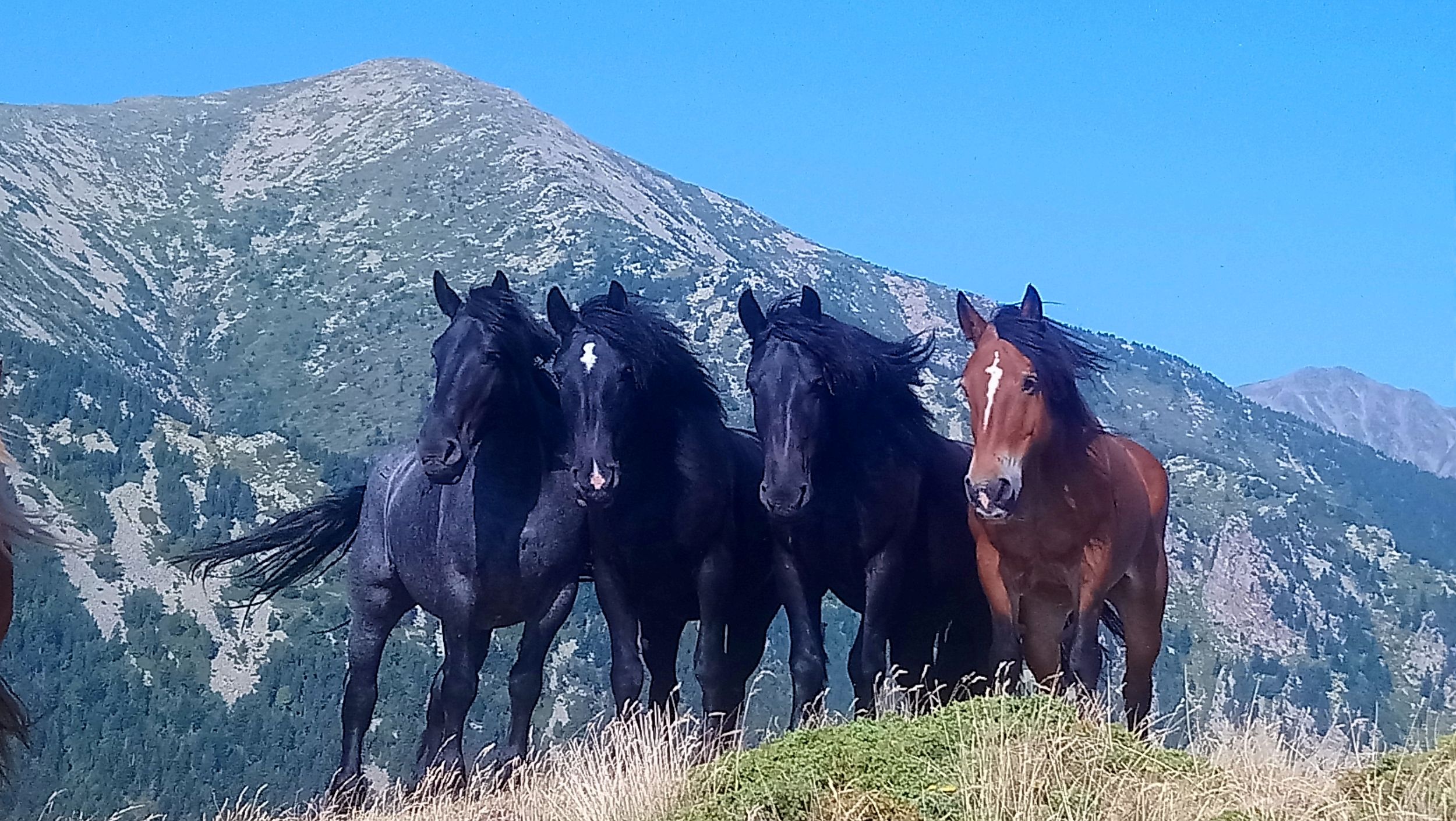
Horses like all mammals are first of all social beings.
Social living of course has survival benefits, but there is much more to it than simply not being eaten. For example, I could refer to my experiences with the Athena team, around the integration of new horses into a herd and the time that can be involved in really settling that change in their social space.
It is not simply about re-establishing the very human idea of hierarchy. We always draw a workplace parallel with our expectations around introducing a new team member. Let’s be honest with ourselves, how well does that go in practice? Or align exactly with our plans.
Equine Assisted Services are so powerful because horses are social animals. As are we. They read us much deeper than we consciously read ourselves (for example, this is well illustrated by the story of Clever Hans). They read and respond with authenticity to our somatic presence. Some people clumsily refer to them as “mirrors,” but this denies them agency in their behaviours (my Athena colleagues have some important insight here). Again it is time to update the script.
This is not about fight or flight, predator or prey, it is about honest and open interactions between two beings.
Our job as facilitators is to help our clients to read themselves though the social language of equine presence. With that insight in mind, to guide them towards some kind of effective personal learning, or to have the opportunity to experience meaningful difference. And to consider the real-life choices that these might offer them.
We learn to understand ourselves when we slow down and see ourselves through their eyes.